 Design Table Podcast
Entry Level UX Portfolio Review: Get Hired for Product Design Roles in 2026 and 2027
- Episode
- 73
- Duration
- 38:19
- Release Date
- November 25, 2026


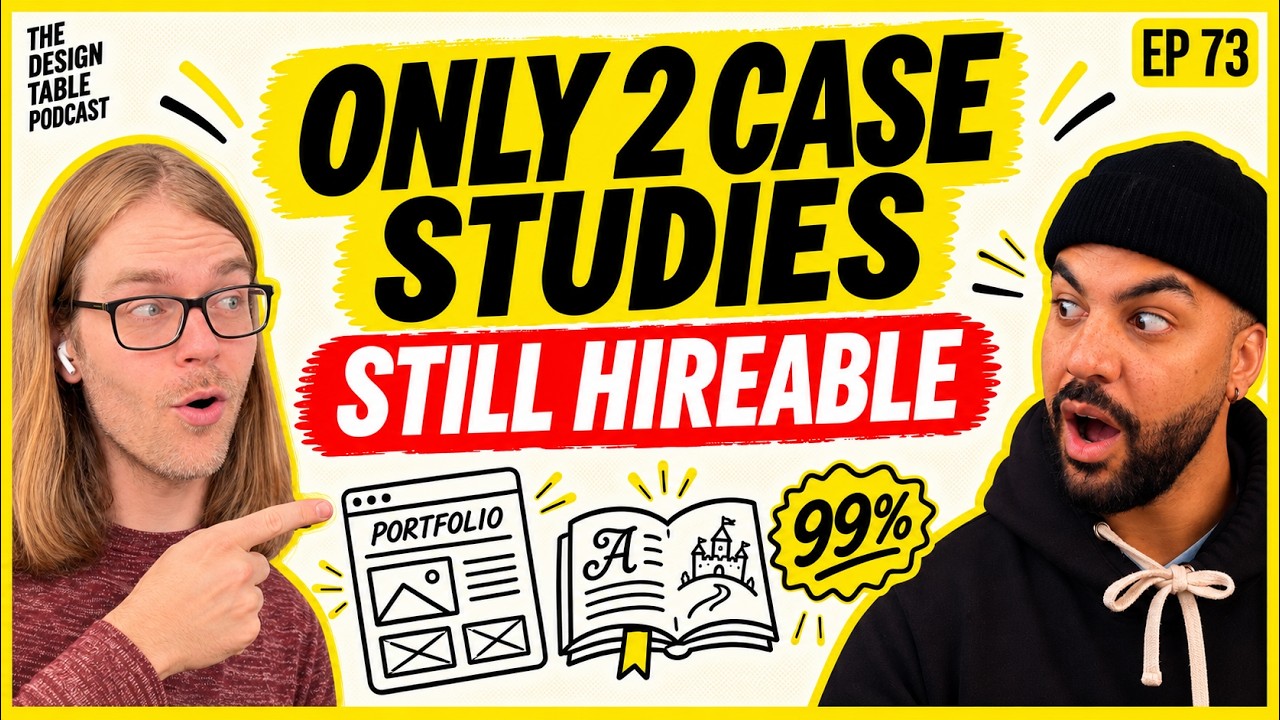
You’re a product designer looking to get hired. Yet, you only have one and a half case studies ready while every guide says you need at least three. What do you do? You sit on your portfolio, polishing and waiting until it feels “ready”. That’s the situation this product designer approached us with.
In this episode of The Design Table Podcast, Tyler and Nick review a listener’s product design portfolio live. Simon is a former English teacher moving into EdTech product design, and he’s worried he doesn’t have enough work to land an entry level role. They take it from there and go page-to-page sharing lots of valuable advice.
Tyler starts with craft and hierarchy: why your name shouldn’t be your H1, why case study titles should lead with the outcome, and how to use benchmark data when a personal project has no real numbers. Nick argues one great case study beats three decent ones, pushes Simon to carry his fairy tale theme across the entire site, and makes the case that the about page matters more than most designers think.
Key takeaways
“I'd rather have you do one super strong mega case study than three okay-ish ones—more is better, of course, as long as it adds something, but if two case studies say more or less the same thing, you don't need both because that just adds confusion.”


“When you don't have the data yet, I like using benchmark data—similar experiments have resulted in X percent increase in conversions or retention, so it looks like you're anchoring on solid research that you're not hoping and praying that you've done work.”
Watch it on YouTube
Hosts
Tyler White
Tyler White is a Principal Product Designer with 15 years of experience in B2B SaaS and fintech, helping teams scope, frame, and connect design work to real business outcomes.

Nick Groeneveld
Nick Groeneveld is a freelance UX and product designers from the Netherlands. He started his design career in 2015 and has since then worked for startups, government agencies, and corporations.