Is Everything You Design Already Copied?

Watch & Listen:


Every product. designer has had this thought at some point: "Someone's already built this. Am I even doing anything original?" It creeps in during a login screen, an onboarding flow, a pricing page, and it makes you second guess whether you're actually adding value or just repeating and copying something else.
In this episode of The Design Table Podcast, Tyler and Nick tackle a listener question: is it a problem if your designs look like things that already exist?
They dig into why copying isn't the same as stealing, why juniors should absolutely study and replicate great work before they try to reinvent it, and why chasing "never been done before" is a fantasy that doesn't hold up in practice.
From there the conversation gets very practical. Nick is deep in pricing page work for multiple clients right now, and the two of them break down the psychology behind free trials, forced plan selection, upsells, and smart business strategy becomes a dark pattern. They also get into why product design best practices exist for a reason, why users don't like unfamiliar patterns even when they're technically better, and how uniqueness in product design shows up underneath the surface, in the business logic, the user base, and the tiny decisions you can't see on a screenshot.
The episode also covers Dribbble and pattern recognition, why copying UI without understanding UX gets you in trouble with engineers fast, and how prototyping is changing the feedback loop between designers and developers, including a story about a "faster horse" redesign that only became a real breakthrough once a developer challenged the whole premise. Tyler closes it out with a surprising story about connecting Claude, GitHub, and a Mixpanel AI agent to diagnose a UX problem in an afternoon instead of a multi sprint investigation, and how it completely changed the scope of what needed to be fixed.
Key takeaways
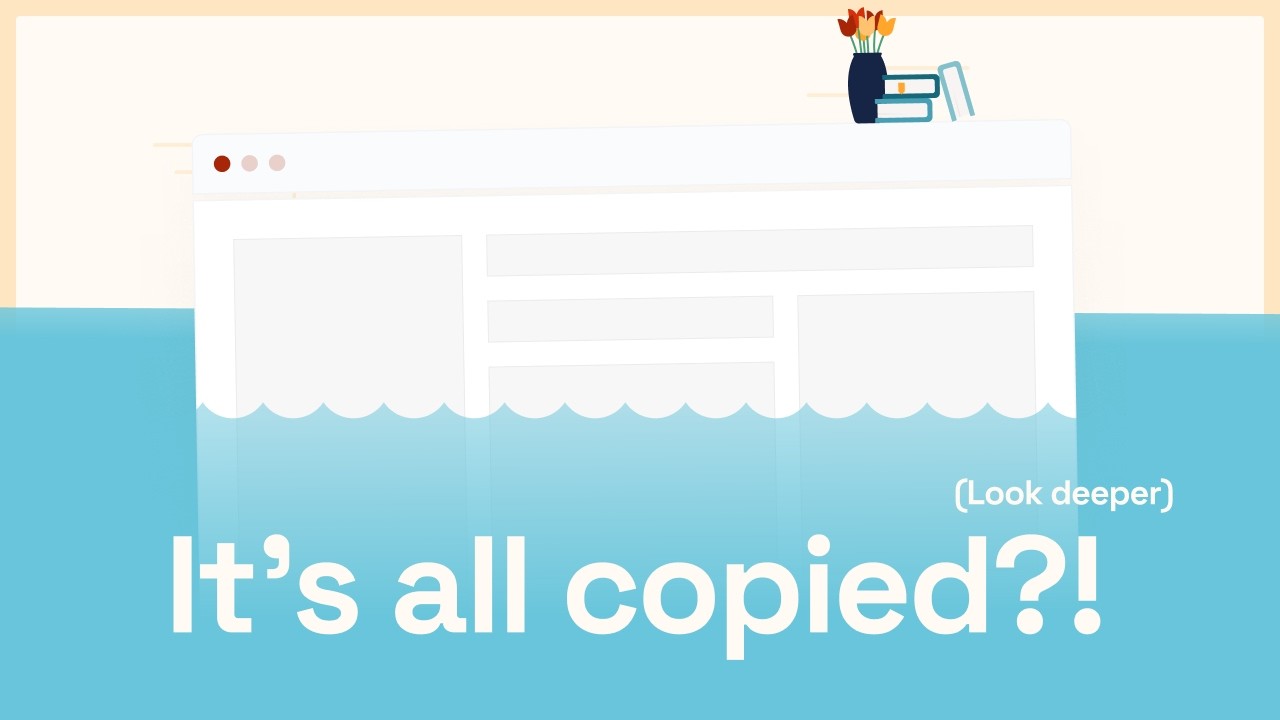
"That whole question of whether everything I design has been designed before is really the iceberg model. At the surface, yes, that's ice, it's been done. But go underwater and there's so much that we as designers have to think about that isn't visible right away. That's my default answer going forward."


"Conceptually it may be the same, but there's a unique experience tied to it because the business and the users are different. The skeleton is great, but you have to fit it to your business. If it ends up being one to one, you've inherited flaws you didn't think you'd be bringing over."
Watch it on YouTube
Hosts
Tyler White
Tyler White is a Principal Product Designer with 15 years of experience in B2B SaaS and fintech, helping teams scope, frame, and connect design work to real business outcomes.

Nick Groeneveld
Nick Groeneveld is a freelance UX and product designers from the Netherlands. He started his design career in 2015 and has since then worked for startups, government agencies, and corporations.